

What is an ESG score and why does it matter for your company?
Updated: Aug 13
Key Takeaways:
An ESG rating quantifies how effectively a company manages environmental, social, and governance risks, typically expressed as a number from 0 to 100 or a letter grade from AAA to CCC.
Live July 2026 scores from SES ESG, a SEBI registered ESG Rating Provider, show even large, well known Indian companies typically scoring in the high 60s to high 70s, with few crossing the 80 mark associated with top tier ESG performance.
ESG scores from different agencies often diverge significantly. A major academic study found the average correlation between six leading rating agencies is just 0.61, compared to 0.99 for credit ratings.
In March 2026, MSCI rolled out Version 5 of its ESG ratings methodology, its most significant update ever, changing scores for an estimated 37% of all rated issuers.
In India, only SEBI certified ESG Rating Providers can legally issue ESG scores, and BRSR Core assurance requirements are expanding to the top 1,000 listed companies by FY 2026-27.
Table Of Contents
Introduction
In India, the bar for true ESG leadership remains genuinely high. Live scores published by SES ESG, a SEBI registered ESG Rating Provider, in July 2026 show even well known large companies landing well short of "leader" territory, with recent scores including India Shelter Finance Corporation at 77.7, Tata Consultancy Services at 73, Havells India at 70.1, and Mahindra Logistics at 69.7, none crossing the 80 mark typically associated with top tier performance. So what is an ESG rating, exactly, and why has it become such a central part of how companies are evaluated by investors, regulators, and customers alike? An ESG rating is a numerical or letter based score that evaluates a company's performance in managing environmental, social, and governance risks and duties. It matters because it directly shapes investor choices, regulatory compliance, and brand trust, and 2026 has turned into a pivotal year for how these scores are calculated and regulated, in India, the EU, and globally. As of July 2, 2026, the EU's ESG Ratings Regulation officially came into force, bringing ESG rating providers under the formal supervision of the European Securities and Markets Authority (ESMA) for the first time, with the power to investigate providers and even withdraw their authorisation for non compliance.
In this guide, we will unpack what an ESG score really measures, how ESG scoring works across major agencies, why ESG scores for companies can vary so much from one provider to another, and what India's evolving regulatory framework means for your business.
What Is an ESG Score?
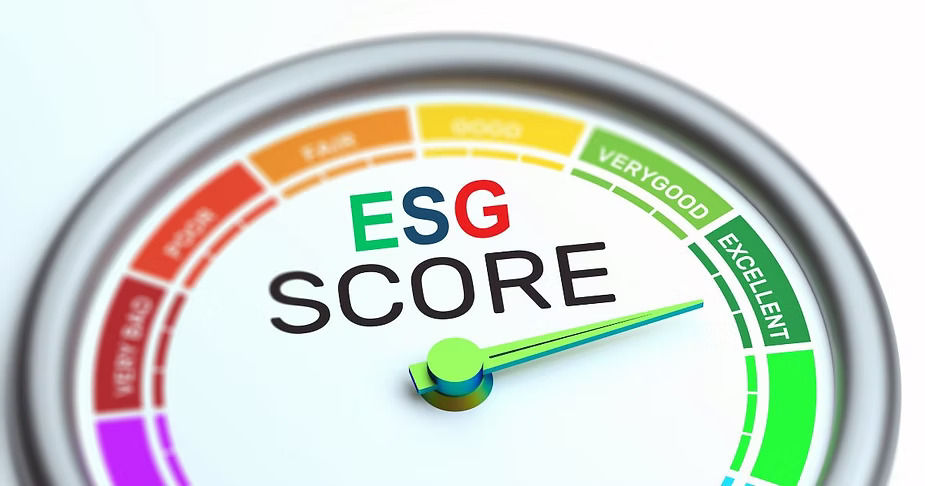
An ESG score is a numerical or letter based rating that evaluates a company's performance in managing risks and opportunities related to environmental, social, and governance factors. Companies with high ESG scores are generally seen as lower risk investments, since they tend to handle external challenges like regulatory change or reputational risk more effectively. Low ESG scores signal potential vulnerabilities. Understanding your ESG scorecard can meaningfully shape business strategy and stakeholder relationships, especially as more investors treat ESG data as a genuine input into capital allocation rather than a side consideration.
Similar to how a credit score reflects a person's creditworthiness, ESG scores give a snapshot of a company's sustainability performance. Rating agencies assess a company's policies, performance data, and any controversies or risks tied to ESG factors, weighting them according to what is actually material for that company's industry. A high carbon footprint, for example, carries far more weight for an energy company than for a software firm, while labor practices weigh more heavily in manufacturing than in consulting.
Core Pillars of an ESG Score
Environmental (E): Carbon output, green energy use, waste management, water sourcing, and land use.
Social (S): Labor rules, worker safety, community ties, human rights, and stakeholder engagement.
Governance (G): Board diversity, honest leadership, fair executive pay, tax transparency, and documentation quality.
Some metrics within these pillars are industry specific, while others, like carbon emissions and labor practices, apply broadly across nearly every sector.
Why an ESG Rating Matters for Your Company

Picture Courtesy by Borealis Software
Access to Capital: Lenders and major funds use scores from agencies like MSCI or Sustainalytics to help decide who gets funding, making a strong ESG scorecard a genuine financial asset, not just a reputational one.
Legal Rules: Governments enforce increasingly strict reporting mandates, making accurate ESG data essential to avoid fines and regulatory scrutiny. To understand how ESG scores connect to formal reporting obligations, see our guide on what ESG and sustainability reports are and why they matter.
Cost Savings: Cutting waste and saving energy, the same practices that improve your environmental score, also improve overall operational efficiency and reduce long term costs.
Public Trust: Indian consumers are increasingly rewarding businesses that demonstrate genuine sustainability commitments. According to PwC India's Voice of the Consumer Survey 2024, 60% of Indian consumers have changed their purchasing habits by buying more sustainable products, and they are willing to pay an average 13.1% premium for sustainably produced or sourced goods. The survey also found that 75% actively seek information about food sustainability, highlighting growing demand for transparent and responsible brands. Beyond customers, sustainability has also become a key factor in attracting and retaining skilled employees, particularly among younger professionals who prefer purpose-driven organizations.
Investment and Risk Management: A company's ESG performance is heavily weighed in investment decisions as a benchmark for gauging risk. If a company has a low ESG score, or has neglected to get one at all, investors may direct capital toward a better rated competitor instead.
What Are the Different Types of ESG Scores?
ESG scores generally fall into a few broad families, based on both scope and format.
By scope:
Issue specific ESG scores: Focus on a single issue, such as one financial or environmental factor.
Category specific ESG scores: Weigh multiple factors within just one of the three pillars, such as environmental performance alone.
General ESG scores: Pull data across all three pillars to produce a single overall ranking. MSCI and Bloomberg are common examples of general ESG rankings.
By format:
Letter Ratings (e.g., AAA to CCC): Used by MSCI and others to classify companies relative to industry peers.
Numerical Scores (0 to 100): Used by Sustainalytics, S&P Global, and others to indicate ESG risk levels.
Tiered Scores (Low, Medium, High): Used by agencies like FTSE Russell to indicate risk exposure and management quality.
Because there is no single universal ESG rating system, there is also no one ESG score that lets you compare every company on equal footing. Understanding which type of score you are looking at matters just as much as the number itself.
Why ESG Scores Diverge Between Agencies

Picture Courtesy by ESG Expertise
One of the most important things to understand about ESG ratings in 2026 is that they are far less standardized than most people assume. A widely cited academic study published in the Review of Finance found that the average correlation among six major ESG rating agencies is just 0.61, compared to 0.99 for credit ratings from agencies like Moody's or S&P. Two companies with genuinely similar sustainability programs can receive meaningfully different scores from different providers, and both scores can still be technically consistent with each provider's own methodology.
Researchers traced this divergence to three main sources: measurement differences, meaning how specific metrics are defined and collected, account for roughly 56% of the gap; scope differences, meaning which issues are even included in the score, account for about 38%; and weighting differences account for the remaining 6%. For a company managing investor relations globally, this means your MSCI score, your Sustainalytics score, and your S&P Global score may genuinely be telling investors three different stories about the same underlying facts.
This divergence became especially visible in 2026, when MSCI rolled out Version 5 of its ESG ratings methodology in March, the most significant overhaul since the system was created. By MSCI's own estimate, approximately 37% of all rated issuers saw their scores change as a direct result, a reminder that ESG scores are not static facts about a company but the output of methodologies that continue to evolve.
Comparing the Major ESG Rating Agencies

Since each ESG rating agency uses its own metrics, scale, and methodology, the resulting scores serve different purposes. This comparison covers five of the most widely referenced agencies:
Agency | Scale / Format | Methodology | Coverage | Best Suited For |
MSCI | Letter grades from AAA to CCC (0.000 to 10.000 underlying scale) | Rules-based methodology assessing industry-specific ESG risks and a company's ability to manage them | 17,000+ issuers | Investment risk monitoring and portfolio construction |
Sustainalytics | Numerical ESG Risk Score ranging from Negligible to Severe Risk | Two-dimensional materiality model covering 20+ ESG risk factors with AI-supported analysis | 16,000+ companies | Risk-focused ESG assessment and due diligence |
FTSE Russell | Tiered ESG scores (Low, Medium, High) | Evaluates ESG exposure and management practices across listed companies and index constituents | Thousands of listed companies | ESG index construction and benchmarking |
ISS ESG | Letter grades with a strong governance emphasis | Financial scoring framework with significant weighting on corporate governance | Global listed companies | Governance-focused investors and proxy advisory services |
S&P Global | Numerical score from 0 to 100 | Corporate Sustainability Assessment (CSA) with sector-specific weighting | 13,000+ companies | Industry benchmarking and inclusion in the Dow Jones Sustainability Index (DJSI) |
A few additional agencies are worth knowing. EcoVadis assesses more than 150,000 companies using 21 criteria across environment, labor, ethics, and procurement, making it especially useful for supply chain evaluation. CDP focuses specifically on environmental disclosure quality across climate, water, and forests, covering over 22,000 companies. LSEG launched an entirely new ESG scoring framework in 2026, built on 220 standardized indicators with additional Plus modules covering controversies and sustainability linked measures, covering more than 16,000 companies.
Rating agencies typically draw on established disclosure frameworks to guide their metrics, including the IFRS Sustainability Disclosure Standards, SASB Standards, GRI Standards, CDP, the Task Force on Climate Related Financial Disclosures, and the UN Global Compact. For a deeper look at how these frameworks translate into actual company reporting, our guide to understanding ESG reporting breaks down the process step by step.
What Does a Good ESG Score Mean?
A good ESG score shows a company's effectiveness in managing environmental impact, social responsibilities, and governance standards relative to its industry peers. A higher ESG score can help companies attract investment, forge partnerships, and reach a larger, more values conscious consumer base. As a general benchmark, a good ESG score typically falls between 70 and 100 on a numerical scale, though the exact threshold depends heavily on the rating agency's own methodology and the industry being assessed. On MSCI's scale specifically, scores from 0.000 to 2.856 are considered laggards, 2.857 to 5.713 are average performers, and 5.714 to 10.000 are considered leaders.
How Are ESG Scores Calculated?
Step 1: Data Collection Data is gathered from sources including annual reports, CSR reports, news articles, regulatory filings, self reported company data, and third party certifications.
Step 2: Assigning Weights Data is categorized and assigned weights based on relevance to the company's industry. Carbon emissions, for example, typically carry more weight for an oil and gas company than for a software company.
Step 3: Final Rating After weighting, scores are aggregated into a final ESG score, expressed as either a numerical score or a letter grade, depending on the agency's methodology.
Limitations of ESG Scores
Despite their usefulness, ESG scores come with real limitations worth understanding before you rely on them too heavily:
No Standardization: A core purpose of ESG scores is comparing companies, yet there is no single agreed methodology for calculating them, which is exactly why scores diverge so widely between agencies.
Self Reported Data: Because companies can choose to supply their own data, there is a real possibility that this information is biased, skewing the final score in the company's favor.
Limited Transparency: Each ESG rating agency relies on its own proprietary metrics and competes with other providers, so most are not fully open about their exact calculations.
Scope Limitations: ESG scoring is designed to quantify sustainability performance, but it cannot fully capture every environmental, social, and governance factor relevant to a company's real world impact.
Understanding these limitations does not make ESG scores useless. It simply means they should be treated as one important input among several, not a complete or perfectly objective picture. For a closer look at where companies commonly struggle with ESG data quality, our article on the top challenges in ESG reporting and how to overcome them is a useful next read.
ESG Scores and Ratings in India: What's Changed
India's regulatory approach to ESG scoring has tightened considerably in recent years, and 2026 marks an important milestone in that evolution.
India's ESG disclosure regime has evolved from the National Voluntary Guidelines (2011) and the Business Responsibility Report (2012) to the Business Responsibility and Sustainability Report, known as BRSR (2021), BRSR Core (2023), and now the SEBI (ESG Rating Providers) Regulations, 2024. Under these rules, only SEBI certified ESG Rating Providers, known as ERPs, are legally permitted to issue ESG ratings and scores to companies and investors in India. Global agencies that have not sought this certification are now restricted from operating in the Indian market. LSEG, for instance, has confirmed it is no longer distributing ESG scores and ratings to customers and users in India, since it has not pursued the required licensing.
On the reporting side, BRSR Core, a subset of roughly 30 key performance indicators spanning nine ESG attributes such as Scope 1 and Scope 2 emissions, water withdrawal, and gender diversity ratios, requires reasonable assurance from an independent provider. This assurance requirement is being phased in, moving from the top 150 listed companies by market capitalization in FY 2023-24 to all top 1,000 listed companies by FY 2026-27. A March 2025 SEBI circular eased value chain ESG disclosure from mandatory to voluntary, deferring the mandatory value chain assurance originally planned for FY 2026-27, giving companies more time to build out their data collection systems even as the overall direction continues to point toward deeper disclosure.
For Indian companies and multinational firms operating in India, this means ESG scoring is no longer just an investor relations exercise. It is an increasingly formal regulatory obligation, with real consequences for which agencies you can legally work with and how rigorously your underlying data needs to be assured.
How to Get Your ESG Score
To obtain an ESG score, companies can engage with rating agencies directly or disclose ESG data through standardized frameworks. The general process includes:
Data Submission: Companies provide ESG data via questionnaires and supporting documentation.
Agency Evaluation: Agencies evaluate the company's ESG data using their own proprietary methodologies.
Score Publication: Once evaluated, the ESG score is published for investors and stakeholders to reference.
For companies operating in India, this process also requires working specifically with a SEBI certified ERP to ensure the resulting score is legally recognized within the Indian market.
Choosing an ESG Rating Agency
With so many ESG rating agencies and scoring frameworks available, choosing the right one can feel overwhelming. Consider these questions before deciding:
How much self reported and publicly available data does your company have?
Which ESG rating agency is the go to standard in your industry?
Which provider do your closest competitors use, if you want direct comparability?
What information will be most useful and credible to your specific stakeholders?
Are there regulations or listing requirements that dictate which rating system you need?
How ESG Scores Are Applied in Business
Picture Courtesy by ESGVoices
ESG scores are not just a passive rating, they actively inform decisions across several parts of a business:
Investment and Financing Decisions: ESG scores are incorporated into investment analysis to evaluate how companies manage sustainability related risks, informing capital allocation and financing terms.
Risk Management and Governance: Organizations use ESG scores to identify areas of exposure across environmental, social, and governance dimensions, supporting more structured internal risk oversight.
Supply Chain and Partner Evaluation: Companies increasingly apply ESG scores to evaluate suppliers and business partners, maintaining consistent sustainability standards across their value chains.
Stakeholder Communication: ESG scores translate complex sustainability data into a format that is easier for investors, regulators, and customers to interpret and compare.
How Can Companies Improve Their ESG Score?
Companies can improve their ESG scorecard by strengthening governance practices, enhancing transparency in disclosures, actively managing environmental and social risks, and aligning ESG initiatives with industry specific expectations. In practice, this usually starts with cleaner data collection and clearer internal reporting processes. Our detailed breakdown of practical tips for improving your ESG report walks through specific, actionable steps you can take.
For companies unsure where to start, or without the internal bandwidth to manage ESG data collection, assurance readiness, and reporting alongside day to day operations, working with a sustainability consultant is often the fastest path forward. We cover this in more detail in our piece on whether ESG and sustainability consulting is a business development opportunity for your firm.
Conclusion
An ESG rating reflects a company's commitment to sustainability, social responsibility, and good governance, but as 2026 has made clear, it also reflects the specific methodology and regulatory environment behind the number. Understanding and improving your ESG score can offer real benefits, including attracting investment, enhancing reputation, ensuring regulatory compliance, and positioning your company for long term success, provided you understand which agencies your investors actually rely on and how those agencies are evolving their own methodologies.
If you are ready to strengthen your company's ESG performance, from data collection to assurance readiness, explore our ESG services to see how Greenmyna can support your sustainability journey from start to finish.
FAQs
1. What is an ESG score?
An ESG score is a numerical or letter based rating that measures how well a company manages environmental, social, and governance risks and duties, typically relative to its industry peers.
2. What is an ESG rating and how is it different from an ESG score?
The terms ESG rating and ESG score are generally used interchangeably. Both refer to a structured evaluation of a company's environmental, social, and governance performance, though "rating" is more often used for letter grade systems like MSCI's AAA to CCC scale, while "score" is more common for numerical systems like S&P Global's 0 to 100 scale.
3. What does a high ESG score mean?
A high ESG score means a company is effectively managing its environmental, social, and governance risks and practices, making it an attractive choice for investors and stakeholders. A good ESG score typically ranges between 70 and 100, depending on the rating agency's methodology.
4. Is ESG reporting mandatory in India?
Yes, for large listed companies. India's top 1,000 listed companies by market capitalization are required to file a Business Responsibility and Sustainability Report as part of their annual report. A subset of core metrics, known as BRSR Core, additionally requires independent assurance, with this requirement being phased in from the top 150 companies up to all top 1,000 companies by FY 2026-27.
5. How can small businesses improve their ESG scores?
Small businesses can improve their ESG scores by starting with clear, measurable sustainability goals, tracking practical KPIs like energy use and waste reduction, maintaining transparent documentation of their practices, and gradually aligning with recognized frameworks like GRI or the UN SDGs, even before formal rating agency engagement becomes necessary.
6. Is an ESG score mandatory for all companies?
No. Formal ESG scoring and mandatory disclosure requirements typically apply to larger, publicly listed companies above certain size or market capitalization thresholds, such as India's top 1,000 listed companies under BRSR. Smaller and private companies are not usually required to obtain a formal ESG score, though many pursue one voluntarily to attract ESG focused investors.
7. What's the difference between ESG and CSR?
ESG refers to a structured, often quantitatively scored framework used primarily by investors to assess a company's sustainability related risks and performance. CSR, or Corporate Social Responsibility, is a broader, often less formalized concept referring to a company's voluntary commitments toward social and environmental good. CSR is generally considered a component within the wider ESG landscape rather than a competing framework.
8. Why do ESG scores of companies vary so much between agencies?
ESG scores vary between agencies because each uses its own methodology for measuring, scoping, and weighting ESG factors. A major academic study found the average correlation between six leading ESG rating agencies is just 0.61, far lower than the near perfect 0.99 correlation seen among credit rating agencies, with measurement differences accounting for the largest share of that divergence.
9. Which ESG rating agencies are most widely used?
Major ESG rating systems include MSCI, Sustainalytics, S&P Global, FTSE Russell, ISS ESG, EcoVadis, CDP, and LSEG. Each provides a different perspective based on its methodology, coverage, and intended use, ranging from investment analysis to supply chain evaluation.



Comments