

Sustainable Business Practices for Small Businesses in India: The Notice, Swap, Build Framework
Updated: Sep 2
At a Glance
Sustainable business practices for small businesses in India come down to three habits: noticing where resources are wasted, swapping high impact items for greener alternatives, and building those changes into daily operations for the long run.
Start by reviewing electricity, water, and waste bills, not guesswork
Swap single use plastics, printed paper, and distant suppliers for local, reusable options
Set a yearly reduction target and train staff to stick with it
Small swaps like reusable cups or digital invoicing add up faster than most owners expect
CSR law and rising ESG expectations are turning sustainability from a nice to have into a business expectation
Why every small business already has a carbon footprint it can't see

For a small business, environmental impact rarely appears as a separate expense. It is built into everyday operations: the electricity used to run machines, the paper cups consumed by a café, the fuel required to transport inventory, and the waste generated along the way. A print shop operating three machines all day, a café using hundreds of paper cups each week, or a boutique sourcing products from another state may not record these activities as environmental costs, but each one has a measurable impact on resources, energy use, waste, and emissions.
That matters because India's MSME sector operates at an enormous scale. More than seven crore enterprises are registered on the Udyam portal, and MSMEs contribute close to a third of India's GDP while supporting employment across the country. When millions of small businesses make decisions about energy, materials, transportation, packaging, and waste, the combined environmental impact becomes significant.
Yet smaller businesses often face a different sustainability challenge from large corporations. Larger companies have generally moved further toward formal sustainability policies, reporting systems, and structured environmental programmes. Many small businesses are still trying to determine where to begin, with limited budgets, fewer resources, and little practical guidance on which changes should come first.
That is where a simple, step by step approach can make sustainability more achievable. Businesses do not need to transform everything at once. They need a clear starting point, practical priorities, and a framework that turns everyday operational decisions into measurable environmental improvements.
Want to be part of the change? Discover the pledge and take the step today. Click here to know more. https://www.instagram.com/p/Dbx0Il1HfDd/
What are sustainable business practices?
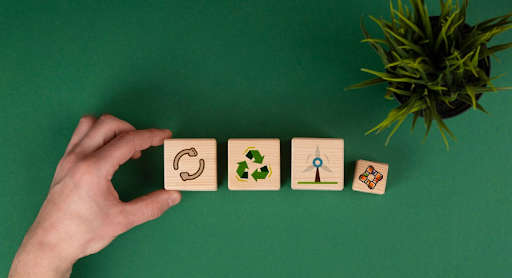
Sustainable business practices are the everyday operating choices a company makes to reduce its environmental footprint while keeping the business financially healthy, covering energy use, waste handling, sourcing, and workplace habits. For a small business, this rarely means a dramatic overhaul. It means noticing patterns, adjusting a few habits, and repeating what works.
For small businesses specifically, the case is practical rather than purely ethical. Lower energy bills, fewer wasted materials, stronger vendor relationships, and a growing base of customers who actively prefer businesses that operate responsibly. None of that requires a sustainability department. It requires attention and consistency.
Why small businesses often skip it
Cost is usually blamed first, but it is rarely the real blocker. Research on sustainability adoption among Indian businesses points to a mix of factors: owners treating sustainability as a talking point rather than an operational habit, no standard way to measure progress, and simply not knowing where their biggest waste actually sits. Without a clear entry point, sustainability stays a good intention that never becomes a Tuesday afternoon task.
Sustainable business practices: examples for small businesses
Sustainable business practices become easier to understand when they are connected to everyday decisions. A small business does not necessarily need a major sustainability programme to make a difference.
Some practical examples include:
Switch to energy efficient lightingReplace older bulbs with LED lighting and use timers or motion sensors in areas that do not need continuous lighting.
Reduce unnecessary printingUse digital invoices, receipts, contracts, forms, and employee records wherever possible. When printing is necessary, use both sides of the paper.
Reduce food wasteCafés, restaurants, and offices can monitor food purchasing, improve portion planning, donate suitable surplus food, and compost unavoidable food waste.
Choose reusable packagingBusinesses can replace disposable packaging with reusable, recyclable, or lower impact alternatives where practical.
Install water saving fixturesLow flow taps, efficient flush systems, and leak checks can reduce unnecessary water consumption in offices, restaurants, workshops, and retail spaces.
Choose local suppliersWhere quality, availability, and cost allow, sourcing materials and products from nearby suppliers can reduce transportation distances and associated fuel use.
Create a proper waste segregation systemSeparate recyclable materials, organic waste, sanitary waste, and other waste streams at the point where they are generated.
Reuse office and operational materialsReuse cardboard boxes, packaging materials, storage containers, furniture, and other usable items instead of replacing them unnecessarily.
Reduce unnecessary business travelUse video meetings for suitable appointments and combine essential site visits or deliveries to reduce repeated journeys.
Encourage sustainable commutingBusinesses can support carpooling, public transport, cycling, or walking where practical, particularly for regular employee commutes.
The Notice, Swap, Build framework: the Greenmyna Pledge
Sustainability becomes easier to act on when the process is clear. Instead of asking a business to change everything at once, the Greenmyna Pledge follows three practical stages: Notice, Swap, Build. First, identify where resources are being consumed and waste is being created. Next, replace inefficient or unnecessary practices with better alternatives. Finally, build those improvements into everyday operations so they continue long after the initial changes are made.
The sequence matters because each stage creates the foundation for the next. You cannot make meaningful improvements without first understanding where the biggest impacts are, and even the best individual swaps will not deliver lasting results unless they become part of how the business operates.
Step 1: Pledge to Notice your resource footprint
Before changing anything, look at what is actually being consumed. Every hire, shipment, and server has a cost the balance sheet does not show, and noticing it is the first honest step. Pull the last few months of electricity and water bills and flag the highest use periods. Go through a week of trash and note what shows up most often. Ask staff and even customers where they see waste happening, because the people closest to daily operations usually spot it before the owner does. Map where supply materials come from and how far they travel to reach the business.
This stage feels slow compared to jumping straight to solutions, but skipping it is the single biggest reason sustainability efforts stall. A business cannot fix what it has not measured.
Step 2: Pledge to Swap for greener alternatives
Once the biggest waste points are visible, start swapping, one habit at a time rather than all at once. Reusable over disposable, local over distant. Old lighting for LED. Single use plastic bags and cups for cloth, paper, or reusable alternatives. Distant vendors for local suppliers where quality allows. Printed invoices and receipts for digital ones.

Businesses that have taken the pledge are already showing what this looks like in practice: coffee husk cups replacing two disposable paper cups a day, glass bottles with a simple reuse note replacing bottled water, and print paper that was already reused twice now going to a recycler instead of general waste. None of these required new equipment budgets or outside consultants. They required someone to notice the habit, question it, and swap it.
The order matters less than the pace. A business that changes one habit a month and sticks with it will outperform one that tries to change everything in a week and abandons half of it by the next quarter.
Step 3: Pledge to Build a business that grows without leaving the planet behind
This is where most well meaning efforts quietly fail, not because the swaps did not work, but because nobody kept tracking them once the initial enthusiasm faded. Building means setting a yearly reduction target, training staff on energy habits and correct recycling, partnering with local recycling groups for safe disposal of commercial waste, and bringing eco principles into how the team works day to day, not just how leadership talks about it. Sharing progress with customers gives the effort visible accountability, not just internal good intentions.
Businesses that reach this stage stop treating sustainability as a campaign and start treating it as a standard operating habit, the same way payroll or inventory checks are handled.
Today, I Notice. Tomorrow, I swap. Then, I Build.
How to make your business more sustainable in India
India's regulatory backdrop is shifting in a direction that makes this less optional over time. Under the Companies Act of 2013, larger companies are required to spend at least 2 percent of their average net profits on CSR activities, and environmental sustainability sits explicitly within the approved list of CSR categories. That mandate has driven real movement: CSR spending across India grew from roughly ₹10,065 crore in FY 2014-15 to about ₹34,909 crore in FY 2023-24. Small businesses are not directly bound by this law, but they increasingly feel its downstream effect, since larger companies expect greener practices from the vendors and suppliers in their own supply chains.
Waste regulation is tightening too. Plastic waste generation in India has been estimated at close to 4 million tonnes annually by the Central Pollution Control Board, with a meaningful share still going unrecycled. E-waste rules are being reinforced with expanded producer responsibility requirements, pushing tracking and disposal standards further down toward smaller operators. None of this means small businesses need to become compliance experts overnight, but it does mean the direction is set, and starting early costs less than catching up later.
Common implementation challenges in India
Unclear cost benefit: Owners assume every green swap costs more. Many, like digital invoicing or better vendor selection, actually reduce costs over time.
No standard way to measure progress: Start with one simple metric, such as kilograms of waste sent to landfill per month, rather than waiting for a perfect measurement system.
Regulatory confusion: Rules vary by state and sector. Checking with local MSME or pollution control board offices directly is more reliable than assuming a rule applies uniformly.
Limited staff time: Assign the tracking task to one person for an hour a month rather than expecting it to run itself.
Green business practices small businesses can start this month
Switch off equipment that is not in use, and set printers to double sided by default
Replace bottled water with reusable bottles across the office or shop floor
Start segregating recyclable waste instead of sending everything out mixed
Hold one short team conversation asking where staff notice waste happening
Pick a single supplier relationship to review for local sourcing options
This is the Notice and Swap stages compressed into thirty days, deliberately small enough that there is no excuse not to start.
Traditional operations vs sustainable operations
Parameter | Traditional approach | Notice, Swap, Build approach |
Waste generation | Unmonitored, mixed disposal | Tracked and segregated, partly recycled |
Resource use | Reactive, no baseline data | Measured against a monthly or yearly baseline |
Sourcing | Lowest cost, distant suppliers by default | Local vendors, verified where possible |
Energy efficiency | Standard lighting, no monitoring | LED lighting with usage tracking |
Operating cost over time | Tends to rise with waste and energy use | Gradually reduced through efficiency |
Brand and customer trust | Limited visibility into practices | Demonstrable, shareable progress |
Long term environmental impact | Cumulative and unmanaged | Actively tracked and reduced |
A practical checklist to follow
Pull the last three months of electricity and water bills and flag the highest use areas
Audit one week of trash and note the most common item thrown away
Ask five staff members and five customers where they notice waste
Pick one swap to make this month, whether reusable cups, digital invoicing, or a local supplier
Set one measurable target, such as cutting printed paper by 30 percent in 90 days
Assign one team member to track progress monthly
Share the results with staff and customers once the 90 days are up
Where this shows up across Indian business, at small business scale
Larger Indian sectors offer a useful preview of where small businesses are headed. IT and services firms have leaned into paperless operations and green office design, a habit any small office can copy with digital invoicing and reduced printing. Textile exporters have shifted toward more local, traceable sourcing under regulatory and buyer pressure, the same logic a small retailer can apply by favoring nearby vendors over the cheapest distant option. FMCG brands are rethinking packaging to cut plastic use, a principle that scales down neatly into a café swapping paper cups for husk based ones or bottled water for glass.
None of this requires a small business to mirror a large corporate sustainability department. It requires recognizing that the same three moves, notice, swap, build, apply at every scale, just with a shorter list and fewer resources.
The path forward
Sustainability for a small business was never meant to be one large investment made once and forgotten. It is a sequence: notice first, swap deliberately, then build the habit into daily operations so it survives past the first burst of motivation. What compounds over time is the habit, not the size of any single swap.
Any business ready to formalize its own version of this framework can take the Greenmyna Pledge and lean on Greenmyna's consulting support to make the plan realistic rather than aspirational.
FAQs
1. What are sustainable business practices for a small business? Practices that reduce a business's environmental footprint through better energy use, waste management, and sourcing, while keeping operations efficient and cost effective, such as switching to LED lighting, reducing single use plastic, and sourcing from local vendors.
2. How can a small business in India start being more sustainable?
Start by reviewing utility bills and daily waste to identify high impact areas, then swap one habit at a time, like plastic cups or printed receipts, for a greener alternative, and track progress against a set target every few months.
3. What is the Notice, Swap, Build framework?
A three step approach where a business first notices its resource waste through simple audits, then swaps high impact items for greener alternatives one at a time, and finally builds those changes into long term operational habits and staff training.
4. Do sustainable business practices cost more for small businesses?
Some swaps need upfront spending, like LED bulbs or certified suppliers, but many changes, including digital invoicing, reduced printing, and better vendor sourcing, lower ongoing costs over time rather than raising them.
5. Are there government incentives for sustainable practices in India?
Various state level schemes and MSME focused programs, including green certification and circular economy support schemes run through the Ministry of MSME, offer support for energy efficient upgrades and waste management. Eligibility and terms vary by state, so checking current offerings through local MSME or industry portals is the most reliable next step.



Comments